Showing posts with label coursework evaluation. Show all posts

Thursday, 10 May 2012

Evaluation - "Looking back at your preliminary task, what do you feel you have learnt in the progression from it to the full product?"

Back in December we were first given the Bloggie to film our preliminary task, and over the course of time since then we've picked up a fair few new skills as well as additional knowledge.

A note: I'm probably going to be referring to this video a fair bit here -


Hey ho, let's go -

Planning
It's fair to say our planning was very... limited for the preliminary task. We had decided upon our narrative (albeit roughly) prior to filming, though it had stretched only as far as "well, we're going to be interviewing a Russian criminal, and there's going to be a fight scene". Very little of the dialogue was decided before we started filming (with a lot of the lines being complete ad-libs...) and our general direction was very much made up on the spot. For our prelim we didn't actually plan when we'd be filming beforehand, it was just a case of "we've got the camera and we don't have lessons now, why the heck not?". The location was just a small room next to the common room (0:07 in the video); originally we were going to use the hall, but there was a P.E. class using it at the time - so we just settled with this room because it was empty at the time.

For the final piece we made a point of getting a good idea  of what we were going to do before we actually went and did it. Makes sense, right? Why did we not think of doing this originally? But yeah, we'd established a good basis of the narrative (which took time, our original one was a huge mess of 'your mum' jokes which would have been great; unfortunately common decency is a thing...) before we headed out to begin filming, and we'd also made a number of decisions on things which would be necessary for the film beforehand (more on this later). We had also made a solid decision of where to film this time around (0:11 in the video).

Mise-en-scene
We didn't decide on any props prior to filming the prelim, which was intentional (As mentioned here, we deliberately over exaggerated the No Budget quality for humorous effect...). This worked well in context of the prelim, but for the sake of the final piece we knew we'd need to actually get ourselves together and find an actual, physical prop (I know, right!?). As soon as we'd decided on the idea for the story, me, Luke and Oliver headed down to the Art shop down the road from the school to see if they had any gear we could pass off as a wine bottle, but came to no luck. On the way back I remembered my dad had had people over a few days beforehand so we just stopped by mine and it turned out he had an empty bottle which we hadn't run down for recycling yet.

In regards to costume, in the prelim our cast were just wearing what they were wearing for school on that particular day; slightly out of character for an interrogation scene, but eh. For the final piece the school uniforms did actually work in context; though we used additional costume elements (Luke's hoody/Samir's hat) to better portray the characters. Oliver's character is shown in standard uniform; this is because we felt from the script that he was rebellious through his actions (after all, he's the one who suggests the characters start drinking) as opposed to his presentation.

In the preliminary it's clear that we hadn't really thought about lighting (0:16 in the video) as there are major differences in how dark it is from shot to shot. As no-one likes a continuity error, we made a point of fixing this in the final piece (0:21). Although it was difficult to control the lighting on-scene, we fixed it using the colour correction tool in FCP in the post-production phase.

Cinematography
From a critical point of view I have to say the cinematography in both pieces is a particularly weak component, which is entirely my fault as I was holding the camera. From 0:28 we can see that there is a notable issue with the stability of the camera in both pieces, yet I believe for the most part there was a slight improvement between the preliminary and the final piece.

Both of the pieces make use of close-up shots to show facial expressions - in the preliminary we have a shot of Luke upon entering the room, which helps present who his character is, as well as a close-up of Oliver as Luke is aiming the "gun" at him, which fits the purpose of showing the fear through his facial expression. We noticed how effective this was; thus felt it was appropriate to continue using close-ups in the final piece to set the mood of what is on screen - in 'The Lads' we have close-ups of both Luke and Oliver to show them as being intimidating (which is played on for humour) as they walk out of the school after meeting up.

A notable point regarding our prelim is that it was heavily based around static shots, which was a case of both a) not having much room to move around in inside the interrogation room and b) me not being particularly confident in moving the camera. We did work on this with our final piece, as we have a few moving shots, most noticeably the tracking shot following the characters down the road during the title sequence.

Sound
Sound is something which I believe has been a major focus of developing our films. In the prelim our diegetic sound consisted of the dialogue, and a sound effect (the buzzer). All of this diegetic sound (with the exception of Stephen's really out of place scream) was recorded live on-set through the camera's built-in microphone and... the quality is pretty darn poor. It sounds very muffled and in some cases it is difficult to make out what is being said. The buzzer (which did not actually exist!) sound was literally made by having Samir (who was with us at the time) saying "bzzz". Yes, I am deadly serious.

We knew from reviewing the prelim for the first time that the sound quality would need to be addressed for the final piece, and when filming for it we noticed it was especially poor because we were filming next to the main road (health and safety: none of us got hit by a car, because we stayed well away from the edge of said road. Just thought I should clarify that.). What this led to was possibly the most frustrating phases of putting the film together in having to record overdubs and then mix them into the film. This was much more difficult to get right than I'd originally predicted on the basis that we needed to get each clip of dialogue to the exact right level for it to sound like a natural flowing conversation. It was also necessary to keep some of the background noise intact, because at the end of the day it would be completely unrealistic to see our characters walking next to fast moving traffic, whilst hearing absolute silence beyond the occasional "for god's sake".

In regards to the non-diegetic sound... in the preliminary, there was none. Nought, zero, etc.. Whilst adding to a sense of realism, it did make the film seem a little slow and quiet for a comedy film, so we decided that it'd be necessary to add some background music and sound effects. Most of the action on screen during the intro is shown along with a heavy bassline which served as our non-diegetic sound; this gives the film a constant pace. We also have a vocal theme playing during the title sequence, with lyrics describing laddish behaviour - this reinforces the image we've been trying to create for our characters.

Editing
At 0:42 we can see examples of the use of editing in both the preliminary and the final piece. In the prelim our editing consisted of just putting the clips we were using in one after the other, just for the sake of showing the sequence of events. This was also necessary in the final piece, yet we made additional use of more advanced techniques in FCP too. Not only did we use the harsh WideTime filter shown in the video above (which we found out about through trial and error, the best way of learning things!), we also used the wireframe tool to form an action match transition during the part where Oliver runs through the door (which makes the framing of that scene much more aesthetically appealing) and to fix a minor continuity error where Oliver picks up the bottle from the bush.

It should be noted that with Final Cut we had some problems with exporting the preliminary due to not knowing which settings would be best for our film. This was fixed when we got around to exporting the final piece as by that point I'd looked up tutorials online which had given me a better idea of how to go about doing it.

Another point worth mentioning is that some of the transitions in the prelim are a little choppy - I attribute this to the lag in Final Cut misleading us as to how much of the shot would be seen in the piece. Some parts which appeared to cut out in the Canvas in FCP played properly in the export, which was useful for us to know as we were able to make sure we'd accomodated for this in the final.

Technology
(I know I've been over the technology we've used in a previous post, but it's kind of relevant here too so I'll go back over it briefly)

Our tool for capturing video for both the prelim/final has been one of these -

(because we all love recycled stock photos!)

The Bloggie has held up well, and unlike other Sony products I didn't completely lose interest in it a few weeks after having it, nor did it leak any of our financial details. The picture quality is satisfactory for what we needed it for.


- Final Cut Pro: I've mentioned most of what I need to say already in the post, but I will say our use of FCP's features was significantly more effective in the final piece; in the prelim it was just a case of throw everything together on the timeline and call it a day, whereas with the final film opening we made much more advanced use of its features, such as the previously mentioned wireframe and filters.

- GarageBand: In the original prelim piece GB was just used as a source of the scream sound effect. We made much better use of the software for the final piece, including recording a song in it (with live vocals), putting together a backing track for the intro, recording voice overdubs and putting together our own sound effects, including the magical piano effect by yours truly.

Feedback
When putting the preliminary task together we did really just throw it together ourselves and think "it'll do"... we took a much different approach with 'The Lads'. We constantly made a point of asking both peers from our class and Sir for input on what we were doing as we were going along (in the "hey, does this look okay to you" style), which helped us greatly as it means we could iron out any mistakes as we were going along, resulting in a much more polished product.

-HM.

Wednesday, 9 May 2012

Evaluation - "What kind of media institution might distribute your media product and why?"

A massively important part of distributing a film is finding a distribution company to get the film out there and publicise it for us, so that it can be acknowledged by the public. As appealing as the concept of travelling town to town to show the film ourselves may be, it's certainly isn't the best way to earn a good profit from it.

There are several thing we will need to take into account when deciding which company to pitch our film to -

  • The appeal of our film - if the company has a history of distributing comedy films aimed at teenage kids, they're more likely to buy into our film than say, a company known for distributing Bollywood films.
  • The size of the appeal - we need a company who will be able to push our film to the largest possible audience. As the film has a fairly mainstream appeal in the UK we'd probably benefit from a larger British company; we probably wouldn't have much luck pitching to a major American company as it's more than likely they wouldn't 'get' our film.
  • What they could offer - It's fair to say that if we haven't heard of any existing films a company distributes, they're probably not the best at marketing/promotion. We need to find an institution who are efficient at creating public knowledge of their films, as we want our film to reach the largest possible audience.
As I'm constantly reminded, long paragraphs tend to be seen as dull, so for the sake of making this more simple to interpret, I'm going to compare these in grids. (Click to see these in their larger, high resolution beauty)... 


From these three companies I feel we would be best to pitch to Entertainment Film Distributors, on the basis that they are more likely to be open to our film's concept. This is because of the British influence behind our film which can be seen clearly in the style of humour used throughout - it would have much more of an appeal to a British audience, so EFD would benefit more when they try to market the film in the UK than one of the American companies would when they try to market internationally.

Should this not be possible out of the American firms I believe we'd have more luck with Warner Bros.; their back catalogue shows a huge range of films, some of which appear to have content produced outside of America (heck, they have some Japanese material in the form of their Pokémon/Yu-Gi-Oh material - it is the 4Kids dubs they've distributed but the Japanese influence is still somewhat visible). This shows that they may be open to distributing a film like ours which originates outside of America.

-HM.

Tuesday, 8 May 2012

Evaluation - "Who would be the audience for your media product?"/"How did you attract/address your audience?"

Our final film piece, "The Lads" appears to have a fairly distinct appeal to younger people - and this is something we've played on whilst putting the piece together, due to the success of the likes of The Inbetweeners.

We can see that our film has had a positive appeal to younger people (of the age 0-20 bracket) from the results of our audience feedback, from the presentation evening. Whilst statistics certainly don't prove everything (and it's open to debate about just how accurate this interpretation is) we can see that a great deal of the people who provided feedback were 20 or under, and the feedback was positive, which could suggest that our film may have a certain appeal to people of this group (though that being said, just because there's a trend doesn't mean there's a correlation. Some may have just thought it was a well produced film).

There are a number of different things which we have done to attract this audience. The first thing to note is that because our main cast are males, we have expected young males to appreciate the film more as they can relate to these characters. Because of this initial point, we've consistantly tried to appeal to young males with the humour used as well as other attributes.

Character
As mentioned before, they're three young lads. We've focused heavily on their "laddish" behaviour (Oliver getting kicked out of his lesson, them seen drinking in public), which is generally believed to appeal to males.

Setting
They're in a school; teenage kids can relate to this. They know the school culture inside out, therefore they can identify the characters' position within said school (in that they're the rebellious, out of place types). Pretty pictures of our filming location here!

Costume
We can see the characters in school uniforms, with the kind of modifications (Luke's hooded jacket, Samir's hat) that one would expect from these kinds of rebellious school students.


As young people are typically in school a lot they can identify these kinds of people, thus the context of the film will make more sense to them than other social groups.

Dialogue
The characters are heard speaking in very casual means ("just got kicked out", "it stinks!" etc.), which is typically how teenage kids speak to one another. Again, this allows them to relate to the characters even more.

Background Music
During the opening of our piece our non-diegetic sound consists of a fairly heavy bass riff - the kind heard in hip-hop and occasionally rock music, which is typically fairly popular amongst teenage males. We play on this further once the full song kicks in during the title sequence as we start hearing rap/rock vocals coming in (with plenty of over-the-top vocal effects) which is reminiscient of those heard in the kinds of music popular with youngsters (though I like to believe our song isn't quite that bad...).

We've also deliberately subverted this exact point during the scene in the opening where Oliver picks up the bottle, and the non-diegetic sound consists of a really out of place piano motif for humorous effect (thus supporting Bakhtin's Carnivalesque concept which revolves around subverting tropes/expectations for humour/chaos); whilst this completely goes against the conventions of laddish films, the viewer is likely to realise this and see the funny side of it, given what is being shown on screen.

Title Sequence
Yes, we show youngsters drinking, and yes, Common Sense Media would go ballistic about it. But as I looked at previously, showing things which irritate adults generally gains the appeal of the youth. This kind of rebellious behaviour isn't the kind of thing which a parent would want their younger kids watching, thus ruling them out, but it does raise the overall interest of older teenagers. The filter we've used overaggerates this surreal rebellious behaviour further, thus making this more of an impact.

(Responsible behaviour time!) 


Written Titles
For the sake of keeping the appeal of this to older teenagers we've used a sensible serif font for the credits, as this will do the job without looking too over-the-top or childish (which would more than likely put off our intended audience).

(The font isn't over-the-top ridiculous, but it doesn't seem too 'serious' either)

Our title card (which just reads "'The Lads'") is in a slightly more stylised font, though again we've taken care to ensure it has been used in context and doesn't look out of place for a film aimed at older teenage males.


-HM.

(Updated! Now I am home to have taken new screenshots and recycle one!)

Monday, 7 May 2012

Evaluation - "How does your media product represent particular social groups?"

Okay, it's about time I did something productive! One of the tasks set is to look at the ways in which different social groups are represented in our coursework piece.

There are three main things in which we can see represented: age (teenage kids), social status/class and gender (male).

Age
Our cast consists of three teenage kids. There are several ways in which we have met the stereotypes regarding youngsters in the film opening.

One of the common beliefs about teenage kids is that we're self absorbed and believe that the world revolves around us - and one of the ways this is shown in our clip is in this scene:


Here we see Samir's character stop to put his hat on. At this particular moment, the thudding bass riff from the BGM cuts out all of a sudden; this shows that as Samir's character is doing something, everything around him should stop and all of the attention should shift to him. This is also shown in the shots themselves; he's in a school environment and so it's highly likely that other people would be in the area, yet Samir is the only person seen on screen during these parts.

Another stereotype regarding teenagers is that they want to be seen as individuals and therefore are seen to want to express their individuality; in our film we've touched on this concept by introducing all three characters individually, in separate locations within the school setting -


On top of these points, there is also the typical "teenage angst" view, which sees teenage kids generally hating everything about the world around them because we're too hard done by and no-one understands us - this can be seen in this shot especially -


The close up shot here really highlights Oliver's facial expression here - it's fair to say he looks more than a little bit wound up...

We can also see an example of Barthes' Mythologies concept in the way that the teenage kids are shown in a school setting. People generally associate youngsters with school, thus the film satisfies the audience's expectations.

Gender
Our characters are three young males, and given the setting of the school it was inevitable we were going to touch on the idea of boys rejecting the school's socialisation.

There's several ways in which we've shown this. One is in Oliver's dialogue, where he states that he's been kicked out of lesson. Whilst it's not specified as to why, it's assumed that it's down to "misbehaviour"/conflict with the teacher (from the way he seems to be running away from someone during the intro) - boys are generally expected to be punished more by teachers for their "laddish" behaviour, which actually support's Francis' findings that they act this way in the school to avoid being labelled as swots (who are seen as feminine).


We can see a further example of this rebellion against the school system in the costume - despite being in an environment where one would expect the characters to be in a formal uniform, Luke's character has worked around this by wearing a hooded jacket, as has Samir with his hat -


This male rebellion shown in our film extends beyond that against the school system and towards rebellion against society as a whole; males are usually thought to not care what others think about them in the way that females do, and this is shown in the way that the three characters don't see an issue with picking up a wine bottle they randomly find in the street and then drinking out of it. We've actually exaggerated this with the editing by applying an over-the-top WideTime filter, which highlights just how surreal this behaviour is.

Social Class
This is quite a complex thing to explore in our case, on the basis that it's had to pinpoint exactly how well-off our characters are. Whilst they are shown as sixth form students (with school sixth forms usually being dominated by the middle class), they show a few traits which are usually associated with the working class.

Firstly is the way in which their costume avoids the expected uniform policy as mentioned before; this kind of rebellion against the school is usually expected from working class students (who would be having conflict with the middle class-run school).

Secondly is the language they're using - they appear to be using a fairly restricted code of language (generally associated with the working class) in the dialogue, such as how Oliver just says "guys, look" as he points to the wine bottle, as opposed to explaining what he'd found in an elaborated code (typically associated with the middle class).

On the topic of the dialogue we also hear Oliver's character using mild swears in casual conversation ("what the hell!?" "bloody birds!") which is also typically thought of as a lower-class trait.

-HM.

Thursday, 3 May 2012

Evaluation - "What have you learnt about technologies from the process of constructing the product?"

Over the course of producing the coursework film we have made use of a variety of different technologies. This is a form technological convergence, as each of these different technologies have contributed to the final production.

The primary tool which we initially used to shoot our video was one of these things -

Sony Bloggie
(I'm aware stock photos are the devil; apologies, but I sure taking a photograph of a camera could lead to a paradox of some kind, which could potentially be dangerous...)

The camera we used is a Bloggie - from using this we've established a couple of things: the video records in high definition which is incredibly useful (and by modern standards, 1080p HD is commonplace and lower resolutions are deemed substandard). The sound quality is not so great - though as we were filming by a busy road it wasn't practical to use the sound recorded on scene anyway.

The video is saved locally on the camera, to (I believe) flash memory. This is useful as it means we could plug the whole thing into the computer to make use of the files, as opposed to having to use the tiny not-SD cards which Sony have a habit of using despite them being incompatible with everything else because pretty much everything that isn't Sony uses SD. And I'd have only lost a memory card anyway.

iMac
Again, sorry for the stock photo. I'm a bad person.

The iMac is shiny and is made by Apple, so it must be worth having. Mac OS X supports a few different applications which have been useful when putting the piece together, and the specs of the Macs in school are far superior to the ...things... which can be found in the other classrooms. We've primarily made use of Final Cut Pro 7, but we've also used GarageBand for sound. The Macs we've used seemed to have sufficient resources in regards to storage space, but I'm not too convinced with the memory, as there were several points where it appeared to be moving slowly (though this is more than likely down to the intense weight we'd been putting on it, with the many Final Cut video/sound tracks and filters etc.).

Final Cut Pro
FCP is a powerful video editing application distributed by Apple. This has been extremely useful for us in the editing phase of our production, as it supports multiple tracks for both video and audio. The screenshot above is the timeline from our final coursework piece, and you can see we've made use of additional video tracks for the title credits, and a lot more audio tracks for voice overdubs, sound effects, BGM and the title theme.

So, to break this down further, FCP has been used -

- To decide which shots to use: The first thing which needed doing was for us to go through all of our raw shots and essentially filter through the good from the bad. FCP has a window called the Viewer which plays individual clips from what we'd shot before we put them in the timeline, allowing us to decide which shots we were and weren't going to use. This would continue to be useful as we acquired new shots to add in later down the line, such as the shot with the bird.

- To put things in order: The timeline (as seen in the screenshot above) is where the pieces of film and sound are put together. Whilst there are multiple ways of doing this, I tend to stick to setting the in and out points of each shot in the Viewer (i and o shortcuts for the win!) and then dragging them onto the timeline.

- To add sound: See all of those green bars on the timeline there? Those are sound clips. This has allowed us to add both our diegetic sound (voice overdubs, the bird sound effect in the intro, the sound of Luke hitting the door) and non-diegetic sound (the theme, the piano effect played upon discovering the wine). In regards to the overdubs this has been a bit of an issue - once the clip is on the timeline it can be rather fiddly to get it into place with the video - which is necessary, as otherwise the speech would be out of time with the characters' mouth movements.

- To add transitions: Whilst our video transitions are cuts, this isn't the case with the sound. When mixing in different sounds there are cases where we've used fade in/fade out transitions so the jump in isn't as harsh. The fade in is noticeable when the theme song comes in at the end - it starts off low and increases in volume over a short period of time, allowing the scene to move from Oliver's lines into the title sequence.

- To fix shots: It'd be a lie to say that every shot was perfect from the minute we copied it off of the camera. Some shots (particularly the opening shots with Samir, and the shot where Oliver runs out of the door) were particularly dark, so it was necessary to use the colour correction too in FCP to alter them. In addition to this we used the wireframe a couple of times - once to create an action match cut in the shots where Oliver runs out of the door, so the door is in the same place on the screen in both the inside and outside shots, and again when Oliver picks up the wine bottle - this was to fix a minor continuity error where Oliver appears to be holding it at a different angle in the first shot of him picking it up to the close up shot.

- To add effects: For the sake of proving we are not limited to just the three dimensions visible to us, we used FCP to ALTER THE FOURTH DIMENSION BY SLOWING DOWN TIME (by which, I mean, we used a slow motion effect when Oliver picks up the wine bottle. Technology isn't quite that advanced as of yet, and I hope it will never be. I've seen the lack of understanding about how time works from various different sci-fi works over the years, and trusting these people with the actual flow of time is beyond dangerous...). The other noticeable editing effect we added was the WideTime filter during the title sequence where the characters are drinking - this effect, whilst decupling how long it took the thing to render, works really well in context of the film, as it is representative of the state of mind these kids are in as they are drinking. 


GarageBand
GarageBand has been particularly useful for us as we use quite a lot of sounds in our film opening. We used the Apple Loops both for the drum/bass riff we hear during the intro, the bird sound effect we use during Samir's initial scene and as material to make a backing track with for the title theme. These loops are useful as they allowed me to put some music together despite having very limited musical talent (which makes me feel like a complete hypocrite as this is something which annoys me greatly when it comes to chart music...). As these loops are distributed with CC licenses it meant that making use of them was a very simple process.

Microphones
Along with GarageBand we also needed microphones to record live sound; for the vocals on the song we used my old Logitech mic (complete with Guitar Hero branding!) which did a great job of picking up what we needed it to. For the overdubs I didn't have this with me, so we made use of the MobilePre setup which was in the Mac room. I'm not 100% sure what mic Oliver used as he recorded his overdubs away from us.

Social-based Websites


We made use of both YouTube and Blogger throughout the production of our opening (Google aren't paying me for this I swear):
- YouTube: allowed us to upload videos; this was useful for uploading both early drafts of our piece (for collecting input/suggestions as well as allowing us to log our progress) and the final film opening so that it can be seen by all. (All referring to people who are not trying to access it at school; these web filters annoy me greatly).
- Blogger: This has also been highly useful for logging work progress, meaning that we can see which parts of the film have been modified at what time. What does a Blogger blog look like? You're looking at one now.

We have also made minor use of other pieces of technology - we initially recorded early demos of the title theme on Luke's Blackberry whilst we were working out the melody, and I used iMovie at home to throw together some of the other videos on the ShatterResistantFilm YouTube channel, such as the alternate takes of the meetup scene, the colour correction test clip and the outtakes video.

-HM.

Tuesday, 1 May 2012

Evaluation - Audience Feedback

A while back we invited a group of parents, teachers and friends to a presentation evening at school where ourselves and other groups presented our coursework pieces. As people were watching, we asked them to provide feedback on what they had seen by filling in a pre-formatted questionnaire about our piece.

This has been beneficial for us as it has given us a great idea as to what has worked well and what hasn't - and this is particularly useful as it gives us an idea of what an audience as a whole think of it as a finished piece, as opposed to what just me, Luke, Sir and others in the class think of it as a work in progress.

So what data have we collected, then? We asked the people who were watching to supply their age group (from preset groups), their gender, and their favourite film genre. This gives us a better idea of which groups our feedback is representative of.

As the research documents come to over 50 pages inclusive of the questionnaire pages I'm not going to post them all, but what I am going to post is this document which shows the data pre-analysis, once we'd added everything up, etc..
First thing to note is that although statistics never lie, the source quality of them can be questionable and a great deal of their meaning comes down to interpretation. Some people had neglected to supply their age/gender, and some had left multiple favourite genres etc.. With that said, let's look at the figures.

The primary thing we need to identify are who these opinions are representative of. The mode age group is the 0-20 group, and the mode gender was female - with a 2:1 female:male ratio. Whilst being a very generalised overview, this suggests that the opinions presented here are more representative of females aged 0-20.

Another point we need to work out to identify who these statistics are representative of is to work out what kinds of films the sample group usually enjoy watching. On the questionnaire we left this as an open question to avoid leading the people we asked towards a particular genre, however this does mean that the findings are a little open to question e.g. some people may consider "Spy/Detective" and "Crime" to be one genre.

Most of the people asked identified comedy as their favourite genre - this is especially useful to us as our film is a comedy film, meaning that we can receive feedback from the kind of audience we'd theoretically be marketing towards.

Now to look at the responses...

Question 1: Do you think the choice of settings in the video were appropriate?

52 (94.5% of those who answered this question) people responded positively to the setting, with many specifically mentioning that it makes sense for teenagers to be seen in a school environment.

Question 2: How successful was the video in satisfying the conventions of the genre?
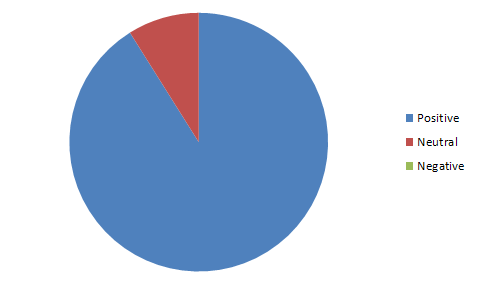
This time around we have 51 positive responses (about 91%) and 5 neutral responses (about 9%) (yeah, I know. Some people didn't answer every question). The fact that most people had positive feedback for this tells us that we are on the right track to fitting into the comedy genre we have been aiming for, though some of the more detailed responses suggested that we could add some more funny moments, whilst some of the neutral feedback said that in some parts it felt like we were trying too hard to be funny, which made the funny moments seem forced. This is something we'd have to keep in mind if we were to rework the intro.

Question 3: How successful is the editing?
Again, mostly positive, with 42 positives, though some people did have mixed views regarding this, with 12 neutral responses and 3 negatives. The points which were picked out mostly regarded the sound, with the overdubs in particular. Some said that they seemed out of time with what was on screen, whilst others felt that some of them were slightly awkward or "a bit dodgy". We did have a fair bit of positive feedback regarding the filter effect on the drinking scene, as they found it effective in context.

Personal thought time - this is actually one of the points which me and Luke had identified prior to the screening (which we attributed to the volume level mixing), so this is most definitely something which would need to be fixed if we were to rework it.

Question 4: How successful were the choice and execution of camera angles and movement?
The cinematography question. 46 were positive, 6 were neutral and 3 were negative. The constructive feedback we received mostly suggested that some of the camera movements seemed shaky - however others felt this was effective in the context of the drinking scene.

This was something we'd acknowledged during the editing process, though unfortunately Oliver had moved away by that point so it wasn't possible to reshoot the affected shots...

Question 5: Was a clear narrative established?
With 48 positive results, 2 neutral results and 2 negative results, it appears that the audience appreciated the narrative. One of the negatives highlighted that there's "not much narrative", which suggests that maybe whilst not much more actual plot could have been explored as it only covers the first two and a half minutes of the film, we could have had more narrative content such as more background to the characters.

Score
On top of the previous questions we also ask viewers to give a score on a 0 to 10 scale, and... every single response was a 7, 8, 9 or 10. From the wording of previous responses this does appear to be on the usual "overall review" scoring system we see in the media where 7 is okay, 8 and 9 are good and 10 is great, so it isn't the most useful thing to analyse - though as a rough judgement we can take that as the mean of the results collected is 8.45 (rounded to 2 d.p.) the general feedback says that the film is generally good.

Whilst these statistics can be useful in regards to making considerations for changes we do have to bear in mind that as we showed the clips to family and people we knew, people may have been going out of their way to be polite as opposed to being critical; therefore I feel we may have to do some more internal critical analysis down the line. This has, however, identified that the primary issues are the camera stability and the overdub quality, which is highly useful to know.

-HM.

Sunday, 29 April 2012

Evaluation - Drafting Process

During the process of putting the film opening together we've had a number of different exported versions which have fixed bugs from the prior version, whilst bring newer, more exciting bugs to the table. By making "final" exports available at each step it has allowed us to acquire feedback from other people who have watched the film, allowing us to make improvements based upon said feedback.

Export 1


Well wasn't this successful? Turns out I wasn't that great at this whole export thing back then.

Export 2


After making creative decisions regarding the direction of the film, we decided to move away from the simplistic abstract genre and move towards the laddish comedy genre.

In seriousness, in this export you can finally get a reasonable idea of our story - three lads are leaving school when they find a wine bottle and start drinking.

Most of our decisions regarding what needed changing at this point were from internal findings on the basis that most of them are pretty obvious. It was clear that the glitches were a hugely annoying distraction which would need addressing, as was the fact that that diegetic sounds (primarily the dialogue) were too low to be heard. There were no title credits as of this point, and some of the colours needed correcting as they were too dark to fit the mood of the film.

Another major point is that the video in this export cuts out about 2 seconds early - again I will pin this down to the export method we'd used; after switching to using the "QuickTime Conversion" method in FCP in later exports this sorted itself out.

Export 3

Third try. By this draft we'd made a fair few different alterations from the original piece, and this was around the point when we started asking other members of the class and Sir for feedback on the film as it was coming along, and the most common suggestion for what could be better was the way in which some camera shots do seem a little unstable. Unfortunately this would have been impossible to fix as by this point Oliver had moved away up to Cambridge and so it wouldn't have been an option to get hold of him as and when we needed to reshoot certain shots.

Another suggestion we'd received prior to making this particular draft was to adjust the mixing of the non-diegetic vocal theme so that the bass could be hard more clearly - thankfully I do have a habit of keeping important files and so I had multiple backups of the master to work with at home, meaning that making this adjustment was literally a five minute job of changing the volume of the necessary tracks. (This master file was also employed to make the reworking of the theme I put in the outtakes video. I cannot apologise enough for that...).

A slight issue that popped up with this export: at around the 1:23 mark where it cuts to the close-up of the pole the consistency in the dynamics becomes a complete disaster - reason for this is because prior to exporting this we'd gone through turning the volume level up shot by shot to note down what was being said to send to Oliver for his overdubs, and I'd just plain forgot to turn that particular shot back down.

Export 4


The most apparent update here is that we've added the opening credit text to the drinking scene. When we'd first placed the credits down we'd used completely different timing, but after showing the WIP to others around us we received a suggestion that it'd be more effective if the titles cut in and out in time with the beat of the music. This made a lot of sense, and thus that is what you see in the above video.

In addition to this we've made use of the wireframe tool in FCP to shift the second and third shots around, making the door appear in the same place in each leaving us with an action match transition. As mentioned previously this was more of a spur of the moment idea on my part as opposed to an idea developed from feedback, but I'm glad we went with it because it looks much, much more aesthetically pleasing in my opinion.

From this point there was one clear part which still needed addressing - the sound. Specifically, the dialogue overdubs, as well as a sound effect for the scene where Oliver picks up the bottle. This would be addressed before the final export...

It's The Final Coursework

It's been a long rough road but we're finally here... this final piece tidies up the issues we'd had previously, but does bring with it some new things we've had to deal with...

These mostly relate to the sound. By this time we'd managed to get in contact with Oliver and he'd had time to record his overdubs for the dialogue, which was fantastic. Luke recorded his lines in the Mac room in a free period, but at that point we had no way of getting hold of Samir. Because of this, we had to resort to my unrehearsed voice acting, which I still find to be a bit uncomfortable to listen to.

The biggest problem here was mixing the volume levels consistently in a way which makes them seem natural and authentic in the scene - this was particularly difficult as me and Luke used different equipment to what Oliver used, which naturally made them come out at different raw volumes. The challenge was adjusting everything to be about consistent, whilst still leaving enough flow to sound like real conversation.

Another sound-based alteration we'd made was the addition of the sound effect which plays as Oliver picks up the drink bottle; originally we'd planned to use an angelic, choir type of sound, but after spending a great deal of time searching online for a CC-license sound effect it turned out that such thing does not exist. This led to us having no choice but to create our own. A quick change of mind led me to the decision to load up the piano musical typing setting in GarageBand, turn the reverb and echo options up to eleven and just play three notes (G chord shape) in quick succession to make a "magical" type of sound. I think this works quite well, and feedback regarding this from other members of the class seems positive regarding it.

There we go then... I still have a lot more evaluation work to post here, specifically regarding audience feedback, more media conventions references and some further references to our use of media technologies.

-HM.

Saturday, 28 April 2012

Evaluation - "In what ways does your media product use, develop or challenge forms and conventions of real media products?"

IT'S EVALUATING TIME! /Cilan

'The Lads' - Final Coursework

This post is going to look at the ways in which our coursework film opening - The Lads - makes use of traditional conventions that we're used to seeing over and over and over and over and over and over and over and over again. 

First up is probably one of the primary things you'll be paying attention to when you watch the film, which are the characters. Our cast consists of Luke, Oliver and Samir - young male characters. The idea of using males as main characters is pretty common in the film industry (particularly amongst comedy films aimed towards a large market - think The Inbetweeners), though it is generally quite common to have a female star as "the chick", who has absolutely no character background other than being a friend/love interest etc.. In a way this does subvert certain expectations, though as we've only shown two and a half minutes it wouldn't make sense for any additional characters to show up.

(In the vein of existing media such as The Inbetweeners, our main cast are young males)

In regards to the action seen on screen (plot stuff!) a fair bit of what we see is typical 'laddish' irresponsible behaviour i.e. getting thrown out of lesson and drinking in public. This is pretty much a textbook example of Barthes' Mythologies theory which says that things we often see together (in this case, teenage lads and drink) will be presented together.

With the sound we have quite a heavy bassline playing whilst the action is happening on screen; we've used the beat of this to support the pace at which the film moves - from what I've seen this is quite a common way to use music, as it keeps the audience attentive to what is going on. During the title sequence, we have used a vocal theme whilst the credits are shown on screen; this is something which is generally rather common. On the topic of the song, we are well aware that not only is rap music popular amongst youngsters, but rock music is too. This was purely what led us to recording a rap/rock inspired theme.

During the scene at 1:37 where Oliver picks up the wine bottle we've slowed down the playback whilst playing a loud 'magical' sounding piano effect - this looks completely out of place for a lad film aimed at teenagers which was an intentional effect; we played on the wonder of finding the drink for humour (thus satisfying Bahktin's "Carnivalesque" theory; which mentions that the piece may subvert the audience's expectations for humour or chaos). It kinda reminds me of those moments in kids' programmes where they try to shoehorn in some educational content by highlighting a certain object/concept on screen, which again plays on the idea of "look how hilariously out of place this is!".

-HM.

Wednesday, 22 February 2012

Evaluation - Preliminary Assignment Full Analysis


A while back I posted a few brief notes regarding the preliminary, however that was too... short. More information/critical analysis coming now!

Shots
We've actually used a fair few different angles throughout the film:
0:00 Close up - not too keen on this shot; it does the job, but I feel the movement is fairly unnecessary (it seemed like a good idea to have the camera sort-of follow Oliver's movement - in retrospect, probably not the best idea ever as it only lasts 2 seconds and so it looks more like a camera wobble.)
0:02 Medium low-angle shot - shows movement from the previous shot accurately, though it looks a bit off-balance. This was before I found the useful wireframe tool; now I know about this, errors like this should be easier to avoid.
0:04 Close up - particularly effective for showing character's expression. Fairly stable too considering the camera wasn't rested on anything.
0:05 Close up - most accurate artist's render ever. Little bit shaky, but not to a point where it's distracting. The close-up was used to highlight the object in the shot (the drawings) for comedic effect.
0:07 High-angle shot - Used to 'reveal' Stephen's character who'd been obscured in all previous shots. The high angle shot looks above him whilst showing him as being in power by the way the shot is framed with him obviously being much higher (physically) than Luke (who he is being shown as being in charge of).
0:08 to 0:25 Over the shoulder shots (shot/reverse shot) - these alternating shots show the progression and pace of the conversation. I have to say that my camera work was particularly sloppy during the parts when I was filming from Luke's end of the table. This needs a bit of work for the final. In case you haven't noticed for the sake of consistency between shots from each end of the table, we actually filmed this entire exchange in full from each end and took alternating cuts from each shot.
0:25 Wide shot - If I'm being honest this shot seems a little unnatural after the previous shot/reverse shot - not necessarily that it's a bad shot, but because the previous shot had been from Oliver's end of the table, and all this shot does is jump forward a little. I should clarify, however, that the jar between the sound isn't actually an error, this shot is meant to show a skip in time (for the sake of showing that the loop conversation has been going on for ages).
0:45 Medium shot - Although this features mostly Luke talking (gibberish) we decided it would be better if we showed Oliver's reaction to said gibberish. This is another one of those shots where my camera work was particularly questionable...
0:54 Low angle - once again, to show Stephen's character as being in power in the scene. This is achieved by having the camera look up to him and have him shown as the only person in the shot (which stands out after the shot/reverse shot scenes showing the others in constant succession). To be honest, this shot could have benefited from a little colour correction.
0:57 Medium shot - fairly steady camera work if I must say so. Just shows Oliver in the shot to show him losing his patience.
1:00 High angle/medium - A moving shot; starts out looking down on Luke to show him revealing the gun, then has a fast moving jolt towards where Stephen is standing as he gets attacked for the sake of emphasising the action. I like how this shot works actually.
1:03 Close up - A continuation of the previous shot of Stephen falling - I am so glad that we missed what could have been a glaringly obvious continuity goof had Stephen's hand moved between shots...
1:04 Medium shot - Camera follows where the gun is on the screen, which draws the audience's attention towards it. Possibly should have had the camera move a little faster, however.
1:10 Medium shot - A kind of mirror of the previous shot, just showing Luke picking the gun back up, though with the camera staying stationary.
1:14 Wide shot - This was particularly interesting to film... the camera is held stationary whilst Luke and Oliver chase each other around the room. Yes. The idea was to keep the camera stationary during the action scene for the sake of highlighting just how chaotic it actually was. Towards the end of this shot we had a particularly funny moment where Oliver bumped into Stephen's 'corpse'... thankfully we were past where we needed to cut when this happened...
1:19 Wide shot - A move in position showing the continuation of the chase. The camera moves upwards slightly towards the end of the shot to keep the characters in the frame.
1:27 Close up - Yes, there is a slight continuity error here - Oliver was only just starting to stand up at the end of the previous shot, yet in this he is all the way up. I think we cut the previous shot a little early in editing. Aside from that, the tense lighting - whilst completely coincidental - works really well in the shot.
1:30 Close up - Another close up to show the contrasting facial expressions (Luke's vengeance compared to Oliver's fear in the previous shot).
1:31 Medium shot - Slight jump part way into this shot caused somewhere during the final rendering. Ugh. Works pretty well as the final shot, and the artificial visual freeze frame over the gun sound effect was for dramatic effect.
1:35 Grey screen - my camera work here is simply fantastic! The previous freeze frame disappears and is replaced by this to show that the action from the past scene is over, and by having a blank screen it leaves a cliffhanger open as to who died and who survived. Crazy internet speculation in 3...

Sound
The sound quality during the dialogue is particularly terrible and our camera should feel terrible. From this we have realised that in the final piece relying on the camera's microphone for dialogue simply isn't an option and that instead we need to dub in the voices.

Mise-en-scene
In regards to mise-en-scene we thought it would work much better if we exaggerate the fact we are working with No Budget. The entire film was shot in a tiny room near the common room, with only a few lockers playing as support for the 'official' location. Rather than use the lack of available filming spaces as a burden to the film, we decided it'd be a better idea to play on it for comedic effect - this went on to inspire the other decidedly no budget features of the mise-en-scene, including using hand shapes as opposed to gun props, and  the incredibly detailed artistic masterpieces which are the case photos on the whiteboard.

Whilst this works well in this film, our final piece will not be as blatantly over the top, so more care will be taken in ensuring we use believable props - such as how we have looked into how we can create realistic looking wine by using apple juice and lemonade.

Editing
Throughout this there are very few traces of complex editing techniques on the basis that the film is meant to show a run through of consecutive events, as opposed to showing multiple simultaneous plot paths.

The main problem we faced involved the cuts - I don't believe that the Macs we have been using have sufficient RAM to efficiently support advanced video editing software like Final Cut Pro, which means that when we have been watching minor edits through the Canvas window it has been lagging. This led to us cutting some of the shots a little short thinking that the lag was just the system taking a while to show us the next shot, when in actual fact it was lagging over the top of the shot that was meant to be playing. This is something we need to be incredibly careful with in the final piece, as there isn't any way to check the state of this without having to continuously export the file.

Lighting
Errr... yeah. About that... our lighting here is particularly inconsistent (this is what happens when you film in a small room using only natural light!). This was an oversight on our part, so we need to be aware of it in the final film. I have been reading FCP colour correction tutorials online for when we get to the shots in the final which will inevitably need enhancing.

Action Match
This could have potentially worked really well in the action scene so we considered using it; however after reviewing the possible shots we could use in the small location it was clear that it just wasn't going to look right. What I realise now that I meant by "this isn't going to look right" is that the only potential spaces we could have used for an action match setup would have required breaking the 180 degree rule (going by the way in which the characters were running around in a circle, on opposite sides - which would have damaged the bearings viewers would have previously developed). Saying that, I wasn't aware of the concept of the 180 degree rule so it was just based around gut instinct that those particular shots wouldn't look right, rather than because I was aware that it'd break a recognised guideline...

180 Degree Rule
I think we've avoided breaking this for the most part. During the initial shot/reverse shot sequence the camera is kept on one side of the characters, and the only time when it starts to move around the table is as the 'panic' moments are beginning to kick in - however this is done at a gradual pace, meaning that the viewer does not lose their bearings or their sense of location in the clip.

Continuity
I mentioned the one most noticeable error earlier, however there is one near miss worth mentioning: just before the action scene, we see Luke picking up his gun, only for it to disappear in the next shot.  I believe this technically isn't an error on the basis that the sudden jump from slow moving, tense shots to the fast-paced action shot represents a slight time jump - with the fact that they initially threaten each other with guns only to go and chase each other around the room being for comedic effect.

Other Stuff
In regards to Stephen's character it's hit me that it kind of fills Bakhtin's Carnivalesque theory in that he is shown to have power over Luke in the first few shots in which he appears (by being staged standing up and staring forward) which gives the viewer the impression that he's a strong, dominant character; yet a minute or so later we see him get knocked down easily, with a completely inappropriate girlish scream for humorous effect, subverting the previous assumptions viewers had made.

Going back to the point I mentioned in the Mise-en-scene section regarding over exaggerating the no budget, there were a couple of other things which support this idea - the most prominent ones are the fact that the dubbed sound effects are blatantly freely available stock effects, and the "sound effect" whenOliver hits the buzzer - which was, in fact, our friend Samir making a "bzzz" noise.

Come to think of it, we could have actually played on the idea of the over-the-top fantasy/comedy a little more by having a character break the fourth wall in their dialogue - I had this idea that it'd be funny if after Luke pulled the gun out to have had Stephen address the camera and say "I think we can see where this is going..." or something just before being attacked. But eh, that's probably me.

-HM.

Tuesday, 24 January 2012

Preliminary Assignment copy copy final copy 4 (Analysis)


After all the work from filming this thing we finally have the prelim put together. Some things to note:

- Cuts: I'm not sure whether to put this one down to my own stupidity or the technology available. On the screen in Final Cut it appeared that frames were dropping around the cut transitions, however since rendering the cuts seem to be pretty choppy and all over the place. I'm not sure if this this is due to FCP's rendering or YouTube's processing (I would check local, but I'm using a six-year old TouchSmart right now which doesn't like playing 1080p videos anyway!).
- Continuity: The one I keep going on about - we do have some minor continuity mishaps involving where the actors are standing from one shot to another. I should note, however, some of these appeared okay in the Final Cut UI, and are just now looking off due to the cuts going a bit whack.
- Shot Changes: See the uber-long shot at 0:24 - there are some moments where I feel we could have used more alternating shots as opposed to having one long shot.
- Props: Obviously the lack of actual props is for humorous effect here...
- Scream/Gunshot: These SFX are both Apple Loops from GarageBand, which can be used within non-commercial and commercial projects providing that they are not sold as standalone sounds or part of sound/loop packages.

I feel the prelim does what it needs to do, and has given us some pointers for when we create the final coursework piece.

- HM.